
Fool Ya’
James Randi spent his life debunking false, outlandish claims as a professional skeptic. In his obituary, he was called the Prince of Reason. Randi’s favorite targets were those who made pseudo-scientific claims.
He was best known for his debunking of Yuri Geller’s claims of being able to psychically bend spoons.
Then again, deception can be an asset:
Lying? No way: that requires emotional intelligence and very advanced understanding. After all, telling a lie requires knowing what the other person is likely to believe, concocting a believable story that fits the circumstances, and modifying it smoothly when circumstances require. Most people can’t manage it well, but HAL does a magnificent job.
Lying is at the pinnacle of human intelligence, because it requires not just knowledge, but metaknowledge. - Donald Norman: Hal’s Legacy.
Dartmouth Summer
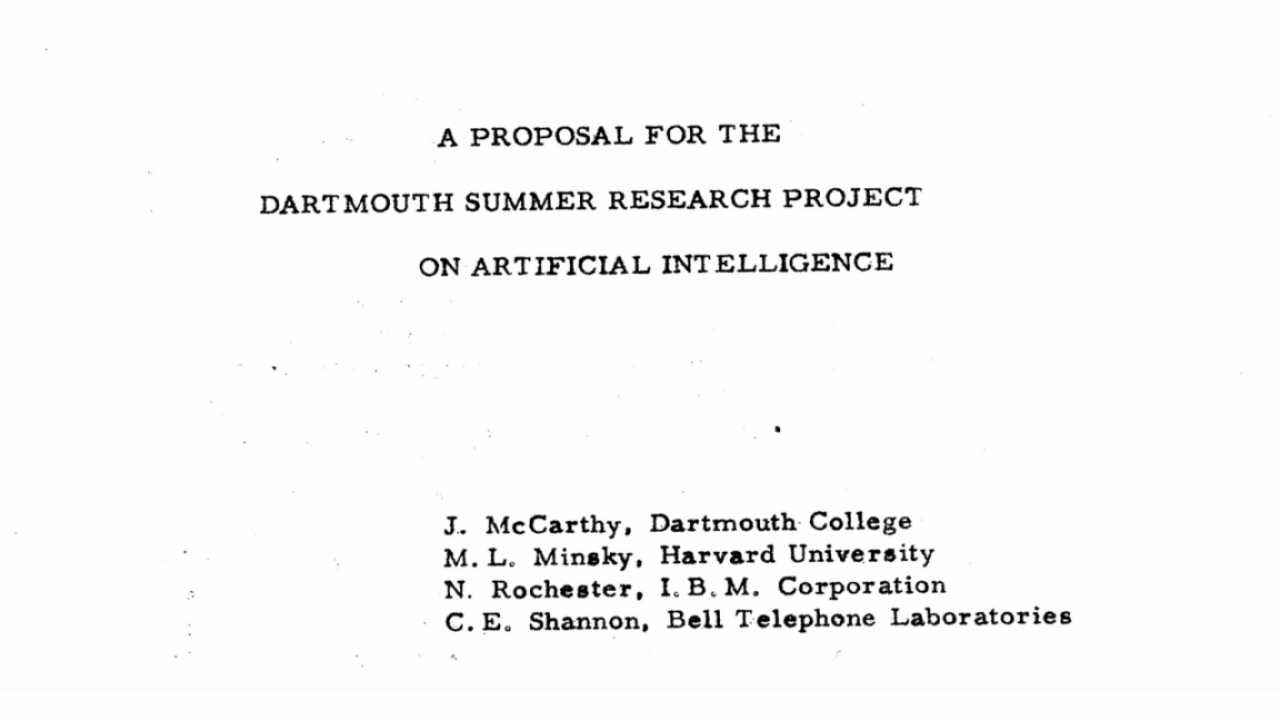
In August 1995, John McCarthy of Dartmouth College and a group of prominent researchers presented a proposal to the Rockefeller Foundation for a 2-month study program during the Summer of 1956: A PROPOSAL FOR THE DARTMOUTH SUMMER RESEARCH PROJECT ON ARTIFICIAL INTELLIGENCE.
The study is to proceed on the basis of the conjecture that every aspect of learning or any other feature of intelligence can in principle be so precisely described that a machine can be made to simulate it.
An attempt will be made to find how to make machines use language, form abstractions and concepts, solve kinds of problems now reserved for humans, and improve themselves. We think that a significant advance can be made in one or more of these problems if a carefully selected group of scientists work on it together for a summer.
The topics they proposed to focus on were:
- Automatic Computers
- How Can a Computer be Programmed to Use a Language
- Neuron Nets
- Theory of the Size of a Calculation
- Self-lmprovement
- Abstractions
- Randomness and Creativity
McCarthy, Minsky, Rochester, and Shannon have since been credited for coining the phrase Artificial Intelligence.
Turing Test
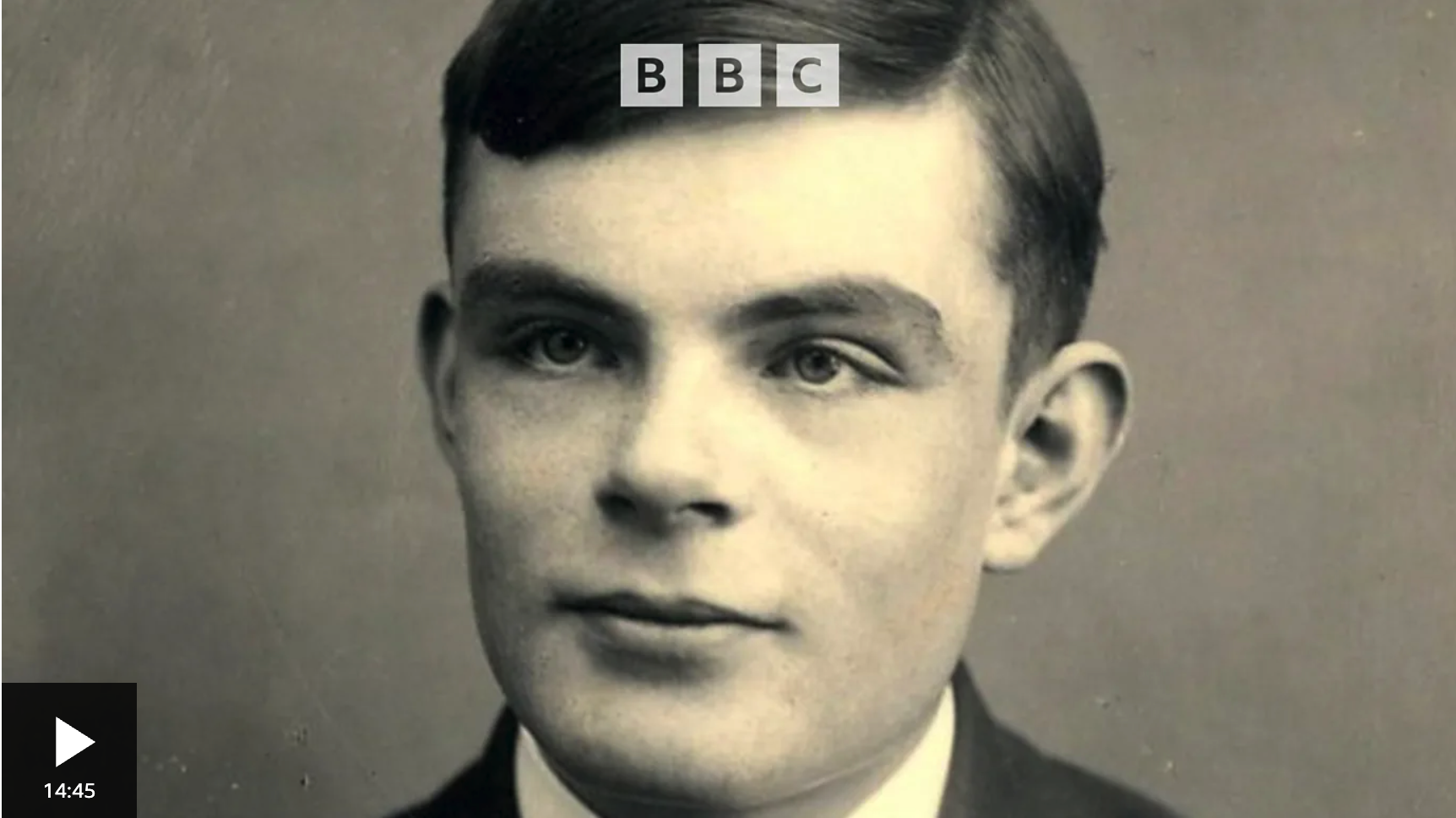
In his 1950 paper titled COMPUTING MACHINERY AND INTELLIGENCE, Alan Turing first proposed what he called the
I propose to consider the question, “Can machines think?” This should begin with definitions of the meaning of the terms “machine” and “think.” The definitions might be framed so as to reflect so far as possible the normal use of the words, but this attitude is dangerous, If the meaning of the words “machine” and “think” are to be found by examining how they are commonly used it is difficult to escape the conclusion that the meaning and the answer to the question, “Can machines think?” is to be sought in a statistical survey such as a Gallup poll. But this is absurd. Instead of attempting such a definition I shall replace the question by another, which is closely related to it and is expressed in relatively unambiguous words.
The new form of the problem can be described in terms of a game which we call the ‘imitation game.”
He goes on to explain his own stance:
I believe that in about fifty years’ time it will be possible, to programme computers, with a storage capacity of about 109, to make them play the imitation game so well that an average interrogator will not have more than 70 per cent chance of making the right identification after five minutes of questioning.
The original question, "Can machines think?" I believe to be too meaningless to deserve discussion . Nevertheless I believe thatat the end of the century the use of words and general educated opinion will have altered so much that one will be able to speak of machines thinking without expecting to be contradicted.
In other words, the assertion
This is equivalent to a sleight-of-hand trick, by not attempting to define exactly what the term means, and not by relying on statistical surveys like the Gallup poll, but by convincing enough people for it to be true.
Turing goes on to pre-emptively swat away objections that may be raised against this question on a number of grounds:
The Theological Objection : that thinking is a function of man’s immortal soul.The "Heads in the Sand" Objection : consequences of machines thinking would be dreadful.Mathematical Objection : there are limits to mathematical logic and powers of discrete-state machines, as postulated by Gödel’s Theorem.The Argument from Consciousness : a machine can not write a sonnet or compose a concerto because it does not have thoughts and emotions.Arguments from Various Disabilities : that a machine can perform X but it is unable to perform Y – any series of moving goalposts, like being kind, friendly, having a sense of humour, telling right from wrong, making mistakes, or falling in love.Lady Lovelace's Objection : that a machine can not originate anything but is limited to whatever we know how to do.Argument from Continuity in the Nervous System : a discrete-state machine like a computer is different than a continuous machine like a human nervous system.The Argument from Informality of Behaviour : It is no possible to account for what a person should do in every possible circumstance. In fact, there may be conflicting rules that machines can not perform.The Argument from Extrasensory Perception : How do you account for telepathy, clairvoyance, precognition and psychokinesis? He grants this as a strong argument and proposed that the Turing Test be performed in a “telepathy-proof room.”
The main issue with using the Turing Test to determine machine intelligence is that it is predicated in
As we’ve seen, the Amazing Randi</u> has a thing or two to say about that.
Physical Turing Test
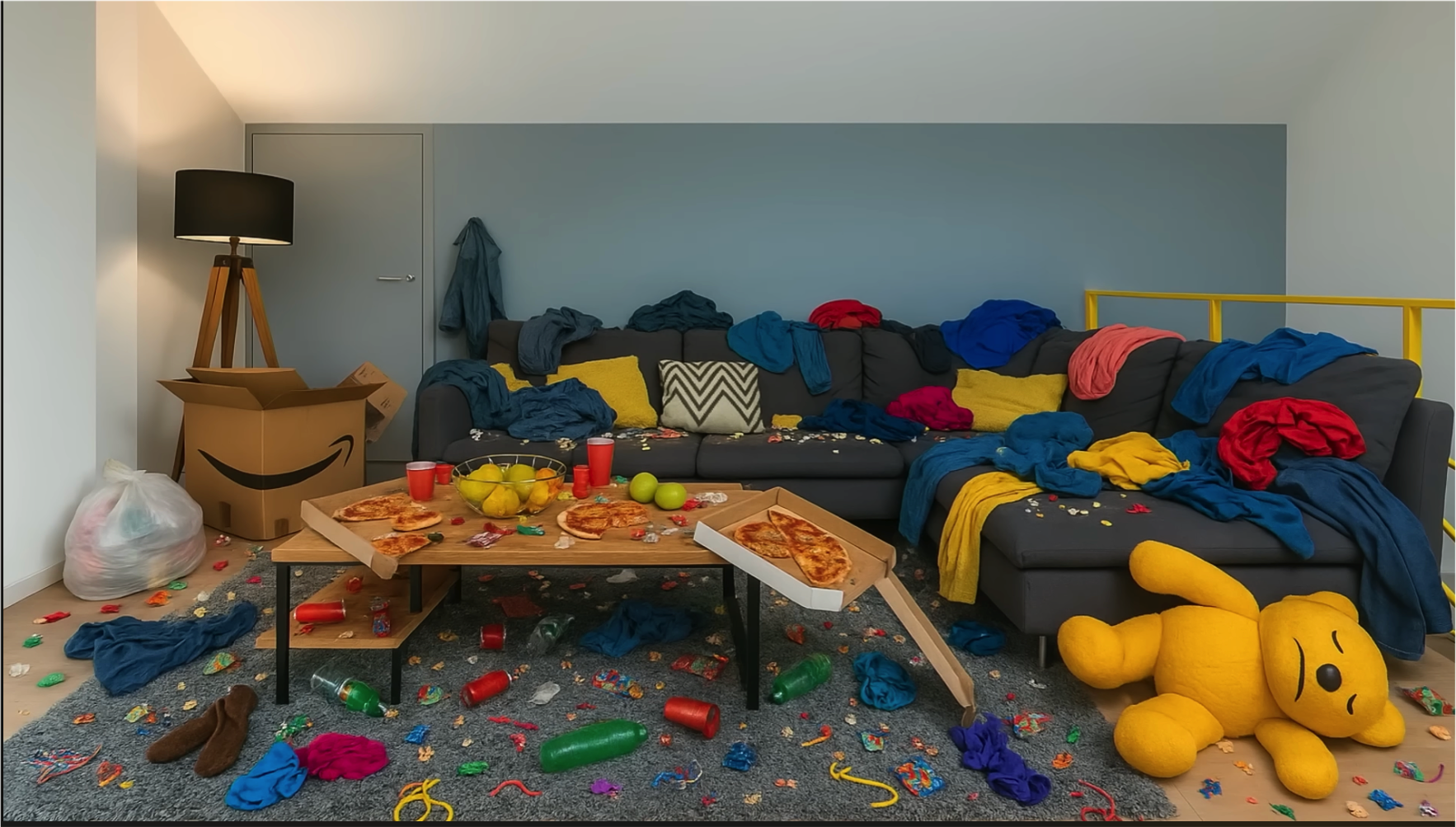
In May 2025, Nvidia’s Director of AI Jim Fan proposed a Physical Turing Test. The premise being that you throw a party that makes a big mess. You come back later in the day and find the room cleaned up and you can not tell if it was cleaned by a human or a machine.

The purpose of the test is to advocate using simulated data, including use of Teleoperation and Digital Twins for training robotics models. If you’ve read the section on Robotics, you won’t be surprised that I wholeheartedly agree with this, as well as modeling LLM extensions on the ROS architecture. The concept of Bags in ROS supports recording and playback of data to help with training and simulation.
The problem with using purely simulated data (so-called Digital Cousin) is that it can not capture the irregularity and exceptions that occur in the natural world. But it can offer accelerated training data that may not be possible to collect in real life.
The physical test itself has one key advantages over the Turing one:
OK, back to so-called Intelligence…
Stanford Binet
In 1916, Stanford University Psychologist Lewis Terman adopted the original Binet/Simon test into the Stanford-Binet Intelligence Scale. The test was used as a basis of Terman’s Genius Study which tracked the success rate of children with High IQ scores. The test is th elongest
Lewis Terman also held some disturbing beliefs:
A story of a different kind emerges from Terman’s own writings—a disturbing tale of the beliefs of a pioneer in psychology. Lewis Terman was a loving mentor, yes, but his ardent promotion of the gifted few was grounded in a cold-blooded, elitist ideology. Especially in the early years of his career, he was a proponent of eugenics, a social movement aiming to improve the human “breed” by perpetuating certain allegedly inherited traits and eliminating others. While championing the intelligent, he pushed for the forced sterilization of thousands of “feebleminded” Americans. Later in life, Terman backed away from eugenics, but he never publicly recanted his beliefs.
The study itself has raised a number of questions. In it:
Terman identified 16 data collection points from which massive amounts of data were accumulated. The categories ranged from Racial and Social Origin, to Test of Character and Personality Traits.”
The study itself is one of the longest-running longtitudinal studies.
# Fun FactoidsLewis Terman’s son, Frederick E. ‘Fred’ Terman went on to become Dean of the School of Engineering at Stanford University. He was instrumental in the formation of what eventually became known as
Silicon Valley . In 1952, Fred Terman helped create the Stanford Research Park in Palo Alto.In 2018, the City of Palo Alto, avoiding connection with advocates of eugenics, changed the name of Lewis Terman Middle School.
The main Engineering building on Stanford campus was called the Frederick E. Terman Engineering Center. This was demolished in 2011 to make way for a park.
The Terman Engineering Library remains to this day. Stanford has spawned a number of AI Companies.
Sub-sub-factoid: My first job out of college was located at Stanford Research Park. It offered free access to the Terman Library, where I spent many happy hours reading research papers.
I Know It When I See It
In JACOBELLIS v. OHIO, 378 U.S. 184 (1964), a case was brought in front of the U.S. Supreme Court to determine whether the state of Ohio could ban the Louis Malle film The Lovers (Les Amants). The state had deemed the movie obscene and the First Amendment case had made its way to the Supreme Court.
Justice Potter Stewart had tried to explain his threshold test for obscenity:
It is possible to read the Court’s opinion in Roth v. United States and Alberts v. California, 354 U.S. 476 , in a variety of ways. In saying this, I imply no criticism of the Court, which in those cases was faced with the task of trying to define what may be indefinable. I have reached the conclusion, which I think is confirmed at least by negative implication in the Court’s decisions since Roth and Alberts, 1 that under the First and Fourteenth Amendments criminal laws in this area are constitutionally limited to hard-core pornography.
I shall not today attempt further to define the kinds of material I understand to be embraced within that shorthand description; and perhaps I could never succeed in intelligibly doing so .But I know it when I see it , and the motion picture involved in this case [The Lovers] is not that.
The Supreme Court tried again in 1973, in Miller v. California to define obscenity (which would not be protected by First Amendment):
The basic guidelines for the trier of fact must be: (a)
whether "the average person, applying contemporary community standards" would find that the work, taken as a whole, appeals to the prurient interest , Roth, supra, at 489, (b)whether the work depicts or describes, in a patently offensive way, sexual conduct specifically defined by the applicable state law , and (c) whetherthe work, taken as a whole, lacks serious literary, artistic, political, or scientific value .
Average Person, Contemporary Community Standards, and Prurient Interests.
If it all seems a bit arbitrary and vague, it is intentional. A little bit like the famous game of Calvinball:
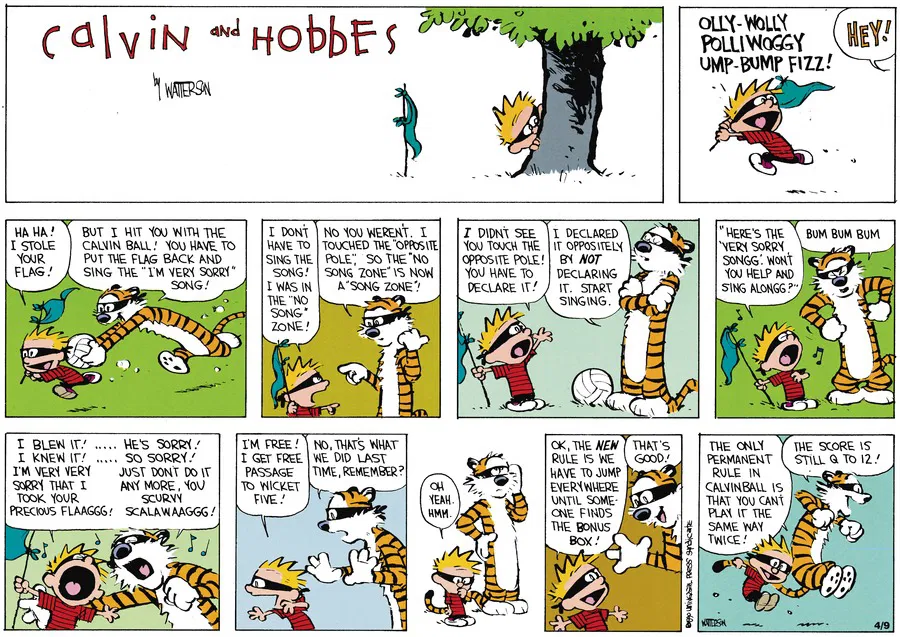
Turing’s Test suffered the same issue. You knew a machine was intelligent when you saw it.
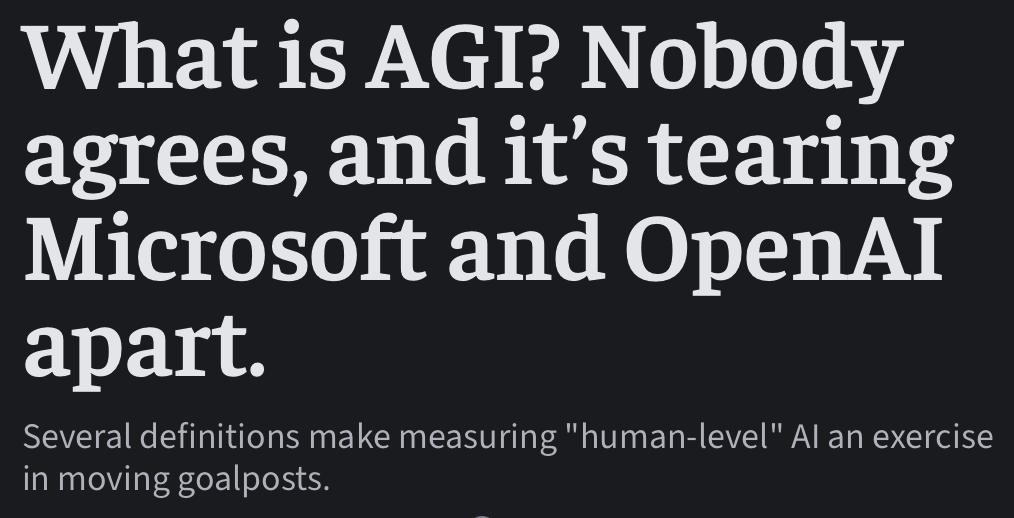
This is a central problem that has plagued AGI:
Title Photo by Amina El Shazly on Unsplash